

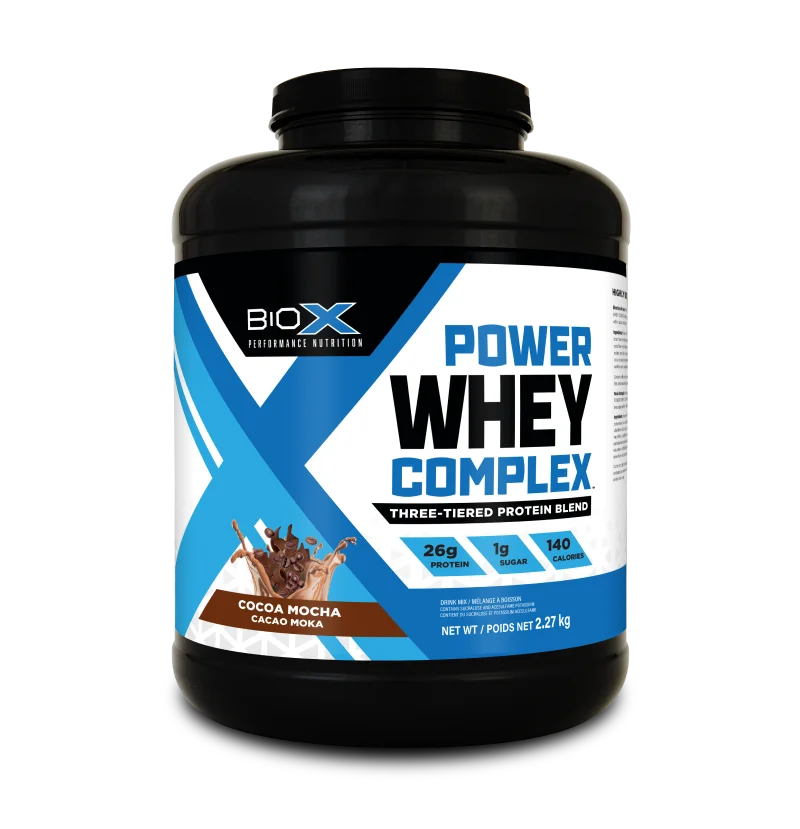
 $114.90
 $189.90
 $67.59 $75.10









Why aren't we talking about joint health?
We discuss heart health. We discuss brain health. We discuss everything. But joint health? It's been normalized as just "part of getting older." Your knees hurt. Your shoulders ache. That's just what happens, right?
Not necessarily.
Joint deterioration is not inevitable—it's what happens when joints aren't actively supported. And here's the frustrating part: the solution is straightforward, but it's not part of the mainstream wellness conversation.
In this episode, we're talking about joint health supplements—the evidence-based options that actually work and could keep you mobile and pain-free for decades.
You'll learn:
Mobility is important to your quality of life. The ability to climb stairs comfortably, train effectively, and engage with your family all depend significantly on joint health.
Most people don't prioritize joint support until they experience problems. By that point, managing the situation becomes more complex.
Taking a proactive approach to joint health now may support your ability to stay active and mobile long-term.
It's a smart choice for your future health.
Transcript:
All right, let me ask you something really simple.
Why aren't we talking about joint health?
Like seriously, we talk about hard health, we talk about brain health, we discuss everything
else.
But joint health, most people just accept that your knees might hurt, your shoulders might
ache and your hips might get stiff.
It's become normalized like it's just part of getting older, but it doesn't have to
be.
The interesting part, there are legitimate supplements for solid research backing them.
But joint health support isn't part of the wellness conversation the way it should
be.
So today, we're talking about joint health supplements.
Options research for joint support that could help you maintain mobility and state active
for decades.
Let's go.
Here's what annoys me.
We have normalized joint pain as inevitable.
You go to the gym, your knees hurt, that's just what happens, you think.
You get older, your shoulders get stiff and that's just aging, right?
Not necessarily.
Joint deterioration is not disney.
It's what happens when joints aren't actively supported.
And here's the thing, most people don't get gunnets on joint health until there's already
damage.
By then, you're managing pain or looking at surgery.
But we could prevent this.
We could support joints proactively.
The issue isn't that joint health supplements don't work.
They do.
The issue is that nobody's talking about it.
It's not trendy, it's not creating.
It doesn't get the attention that other health topics do.
So people suffer unnecessarily.
And like my mom always used to say prevention is better than cure.
Your joints are complex.
A mate of college, that's the cushioning between bones, collagen, the structural protein,
sonovial fluid, that is the lubrication and connective tissue, which is the support structure.
When you train hard, when you move, when you age, these things degrade.
College breaks down, collagen depletes fluid decreases.
Information increases.
This is normal wear and tear.
But here is the key.
You can actually support these systems in slow or even reverse that degrade, degrade,
degrade, degrade, degrade, degrade, degrade, degrade, you can rebuild, cartilage and
you can restore collagen.
And you can reduce information.
But you have to be proactive.
And nobody is being proactive because nobody is being told about it.
All right.
So let's talk about the joint health supplements that actually have the research to help back
them up.
First off, we got glucose meaning conjoined them.
Glucose meaning conjoined in compounds naturally found in cartilage.
These nutrients are traditionally used to support joint health.
Research has investigated their potential role in joint support with some studies suggesting
that they may be beneficial for those interested in maintaining joint health.
And the typical use here is 1500 milligrams of glucose mean and 1200 milligrams of conjoined
and daily.
Number two on our list here is collagen peptides.
Collagen is the structural protein found in connective tissue.
Collagen peptides are a hydrolyze form designed for better absorption.
Research suggests collagen supplementation may support connective tissue health and is
traditionally used by those interested in joint support.
The typical use here is around 10 to 20 grams daily.
The next one we have is three MSM.
MSM is an organic sulfur compound that has been traditionally used to support joint
health.
Some research indicates MSM may have supportive properties for those interested in joint
wellness and flexibility.
Your typical use here is 1000 to 3000 milligrams per day.
A hydrolonic acid this one is naturally occurring compound found in your connective tissue
and joint fluid.
So research suggests our all supplementation may support joint comfort and help maintain
proper hydration in the joint tissue.
Your typical use here is anywhere from 50 milligrams to 200 milligrams per day.
This one one of my faves is the omega 3 fish oil.
So we have discussed omega 3s for overall health and here for joint specific support EPA and
DHA of the key compounds.
Research indicates omega 3s may support healthy inflammatory response and overall joint
function.
So your typical use here is 1000 to 2000 milligrams of EPA and DHA daily.
The last but not least is turmeric and cuckermin.
Turmeric contains cuckermin which has been traditionally used across various cultures.
Research here is investigating a cuckermin's potential support of role in joint health.
And some studies suggest cuckermin may support that joint comfort and help maintain a healthy
inflammatory response.
Your typical use here with this one is 500 to 1000 milligrams of cuckermin daily.
All right, here's our strategic approach.
Foundational wise you're looking at omega 3s, your 1000 to 2000 EPA, DHA, turmeric, cuckermin
500 to 1000 M.D.s per day.
These are commonly used as foundational joint support supplements.
If you're interested in additional support consider adding glucose men in contriden, collagen
peptides and hyaluronic acid.
Lifestyle factors are definitely your essential support here.
So that's regular movement, so walking, mobility work, stretching, adequate protein intake,
appropriate resistance training and definitely healthy weight management.
Just remember supplement are called supplements because they are there to support what you're
doing.
So you still going to take those lifestyle factors into account.
So let me be real with you.
Joint health support isn't a quick fix.
You're not going to take collagen today and notice a dramatic change tomorrow.
A lot of consistent use.
Here's the general timeframe people report.
So week one, to week two, you're establishing a routine.
A week, four to six, some people report their men, not a subtle changes of mobility.
Week eight to 12, these nutrients are to clean, relate in your system.
And some people report more noticeable results in joint comfort and flexibility.
Month four to six with consistent supplementation, many people report that they feel more supported
and noticed improved mobility.
And then plus six months is your continued consistent use may support that long term health
and maintenance.
Just remember here the key is always consistency combined with that appropriate movement and
lifestyle support.
So look, if you're training hard, lifting, running, doing lots of sport, if you're over 40,
your collagen production naturally declines.
So sitting all day as well, can your joints can get stiff and weak and dealing with joint
pain, obviously, you want to stay long term active.
Oh, sorry, you want to stay active long term.
You may need some joint support, but here's what really gets me, even young people should
be taking some of this stuff.
While waiting until your knees are destroyed to start supporting them, preventative care
makes sense.
So why don't we do it?
Here's what I think we're missing.
We have the knowledge, we have the research and we have the tools, but joint health isn't
part of that wellness conversation.
Nobody is really talking about that preventative joint care.
Instead we wait, we develop problems and then we manage the damage.
This should change.
Joint health is preventive, it's affordable and actually works.
It should be talked about as much as heart health or brain health.
The reality is is people who take it seriously, who support their joints early, they stay active
and move up for decades.
People who wait, they deal with pain and limitations.
It is a choice.
All right, so I think that is a wrap.
I hope you enjoyed that podcast until next time, stay curious, stay consistent and good
luck out there.