

 $114.90
 $189.90
 $67.59 $75.10



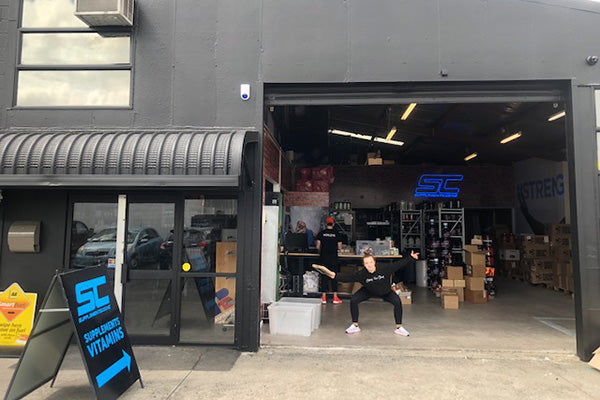



Supplements: hype, help, or total waste of time? In this episode, I break down the three real reasons I take supplements—and why you might want to rethink the “just pee it out” argument.
From fixing hidden deficiencies (hi, iron and vitamin D) to fine-tuning brainpower, to chasing that clean, legal performance boost (hello, caffeine + L-theanine), we dig into what actually works, why intention matters, and how to stop treating supplements like a shortcut—and start using them as a smart tool.
Whether you're a skeptic, a stack builder, or someone who just loves their morning espresso alittle too much, this one’s for you.
Transcript below:
Hi there, how's it going?
Today I want to talk about something that sits at the intersection of health performance
and maybe even a little controversy, supplements.
Yeah, I said it.
The word that makes some people roll their eyes and say, "Supplements are steroids,
they're fake and they just pass straight through you."
So why bother taking supplements at all?
Now I'll say this right up front, I'm not going to tell you that supplements are a magic
bullet.
The truth is in the name, supplements, they're there to supplement what you're already
doing.
But what I am going to do is dig into the why.
And I'll do it with the little and big ideas that hide inside something seemingly simple
I can multivitamin.
So here are the three big reasons I take supplements and why you might want to consider
taking them too.
Let's start with the obvious.
If you have a deficiency, you should probably fix that.
Seems simple, right?
A surprisingly large number of museum owners are walking around low and key nutrients and
don't even know it.
According to the Ministry of House Latest Nutrition Survey, about 32% of adult woman in New
Zealand are low in iron, with young Maori, at Pacific woman at even higher risk.
That is one in three.
When it comes to vitamin D, a 2012 Otago study found that up to 49% of people in the southern
regions in New Zealand were deficient in vitamin D in one to months.
That's almost half the population spending a good chunk of the year, not making it a
vitamin D just because the sun angle isn't high enough.
Now, think about that.
You could be eating decently, getting outdoors, living your life, and still running on a sub-pot
nutrient profile.
Not because you're doing anything wrong, but because of food system, a latitude, even
our sun's grid use, all add up.
Sometimes supplements are like topping up the oil in your car.
No glamorous, but essential.
Alright, so let's say you're not deficient, you're doing okay, but what about if you want
to do better?
This is where the sick and reason comes in, optimization.
I think of this like upgrading your operating system.
You're not sick, you're functioning fine, but maybe you want to be sharper, calmer, more
resilient.
This is the territory of things like omega-3s, creatine, adaptogens like ashwaganda, or even
basic magnesium glassane for a bit.
Now here's where it gets interesting.
Optimization is controversial.
Some people say if you're healthy, you shouldn't need anything extra.
But I'd argue we take this approach in other areas of our life all the time.
We optimize our sleep with blackout curtains, we optimize productivity with apps and time
blocking, why not optimize physiology too.
Optimization isn't about perfection, it's about playing with dials.
Fine-tuning, seeing what gives you a little edge.
That edge could be the difference between a sluggish day and a creative breakthrough.
Okay, now let's talk about the third and most controversial
category.
Sometimes we don't take supplements because we're deficient, sometimes we don't take them
just to optimize, sometimes we take them because we want to feel something.
Let me tell you about one of my favorites.
The first thing I do in the morning is switch on that coffee machine and get a double
espresso on the way.
I think we all have forgotten about this ingredient that is called caffeine.
And caffeine is technically a psychoactive drug.
Legal, common and for many of us, absolutely essential.
What's fascinating is how accepted this is.
Nobody bets an eye when you say you can't function without coffee, but say you're taking
althienine with it to smooth the edge or alpha-GPC for cognitive focus, and suddenly people
look at you like your cooking myth in your kitchen.
But it's the same principle.
You're modulating your brain chemistry to a desired outcome, alertness, focus, flow.
Some new tropics, brain enhancing compounds aim to do just that.
So here's my point.
The drug-like effect of certain supplements isn't inherently good or bad.
It's about intentionality.
Ask yourself, why am I taking this?
What am I trying to achieve?
Am I being mindful of dosage, timing, synergy?
If your answer is yes, then you're not just chasing a high.
You're just running a human experiment, and if it improves your life, isn't that kind
of the point.
So let's zoom out.
Here are the three reasons I take supplements.
One, to fix what's missing.
Two, to fine tune what's already working.
Three, occasionally to experience what's possible, like a legal, safe performance enhancing
boost.
Supplements aren't my religion, they're just the tool.
Like anything they can be overused, misunderstood, or just plain unnecessary.
But use wisely, they can change how you think, feel, sleep, and move.
So maybe the bit of question isn't, should you take supplements, but which ones make sense
for you?
That's the experiment.
That's the journey.
Thanks for hanging out with me today.
If you enjoyed this, share it with a friend who is always asking about your supplements stack,
or who just really, really loves coffee.
Until next time, stay curious and remember, take your vitamins.
To stay tuned in the next video, we'll be back with a new video video.